Domestic violence in Kenya constitutes any harmful behavior against a family member or partner, including rape, assault, physical abuse, and forced prostitution.
Although domestic violence may occur among siblings, and within parent/child relationships or woman-/in-law relationships, intimate partner violence is the most rampant form of domestic violence against women, more than any other gender-based violence combined.
Statistics show that the most common form of violence against women is that perpetrated by a husband or an intimate partner. (www.who.int/intimatepartnerviolence).
In Kenya, domestic violence continues to happen amidst centuries old gender imbalance mechanisms that create inequalities in African societies.
Although men also suffer violence in the hands of women, 90% of perpetrators remain as men. There are more women victims than men. Therefore, women bear the burden of domestic violence.
Many women are mothers. Children, who witness domestic violence, may grow up to become violent adults. Children are tomorrow’s future. It is important for families to create violence-free environments in order to foster peace in society, now and in
the future.
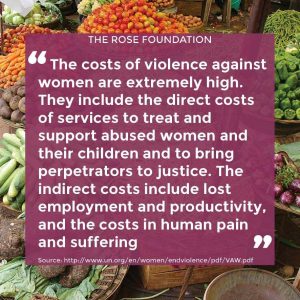
The result of domestic violence is death, injuries, lifelong debilitation, loss of income and livelihoods, reproductive health problems and a huge budget expenditure on health. Thus, loss of earnings and investments as a result of domestic violence makes a huge dent to our economy.
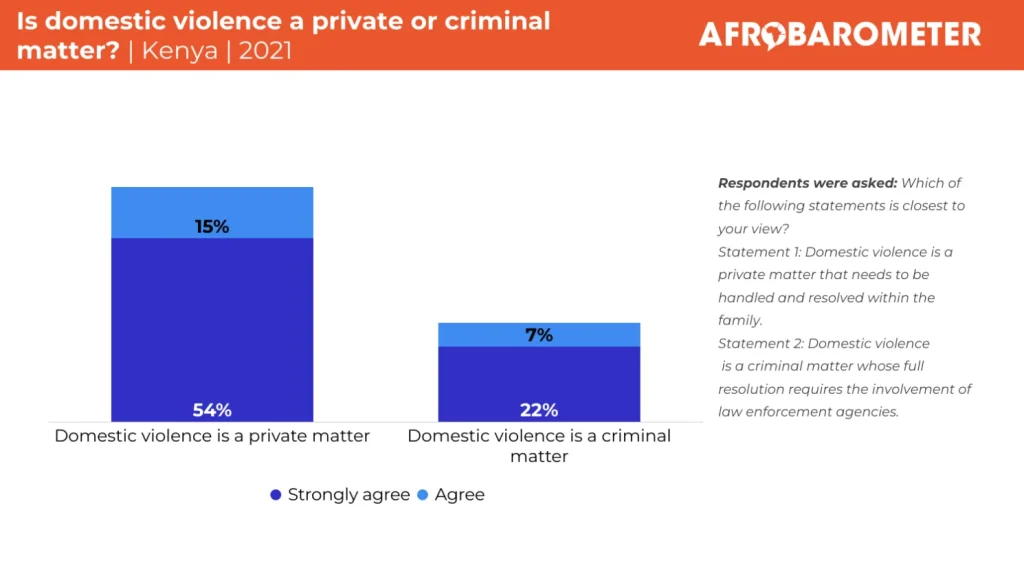
Domestic violence is not just an individual problem or a private domestic affair; it is a societal problem.

 40% of women in Kenya have experienced emotional, physical, or psychological intimate partner violence.